BUILD~Scale~profit
The Future of Residential Mobility
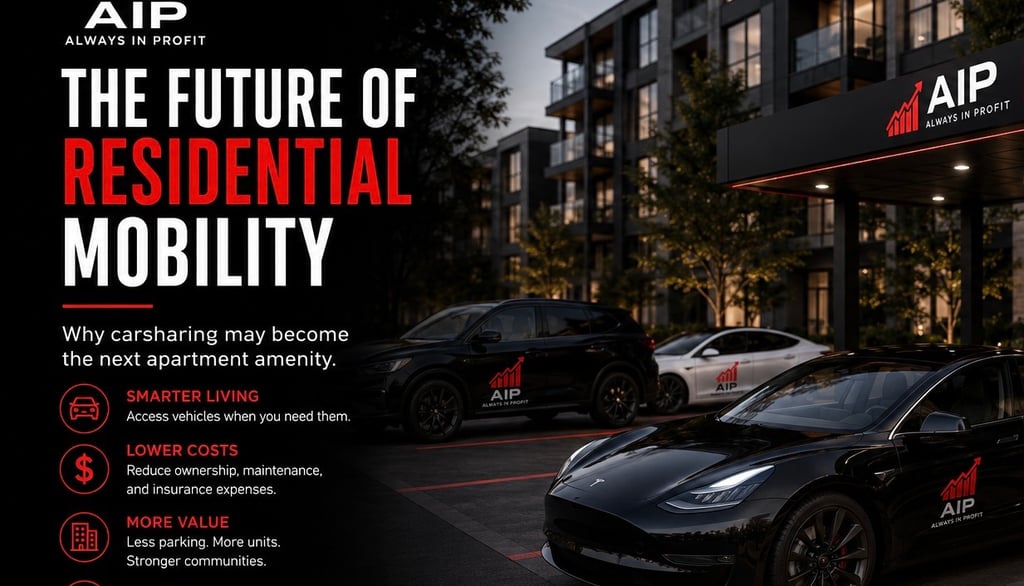
Why Carsharing May Become the Next Apartment Amenity
Always In Profit Ventures
4/13/20267 min read
Introduction to the Shift in Residential Living
The landscape of residential living is undergoing significant transformations influenced by urban dynamics, economic shifts, and changing lifestyle preferences. Traditionally, apartment amenities have included features such as swimming pools, fitness centers, and community lounges. However, as cities evolve and the needs of residents change, there is a growing recognition of the importance of residential mobility.
Residential mobility refers to the ease and flexibility with which individuals can navigate their living environment. In recent years, many urban dwellers are re-evaluating the necessity of owning a personal vehicle in light of increasing urbanization and the rise of sustainable transportation options. This reevaluation is accelerating interest in services like carsharing, which offer a practical alternative to traditional vehicle ownership.
Carsharing, a service that allows residents to rent vehicles on a short-term basis, is becoming an attractive convenience for many apartment communities. This trend reflects not only the changing preferences of younger generations, particularly Millennials and Gen Z, who prioritize accessibility over ownership, but also a broader societal shift towards sustainable living.
Economic factors further contribute to this trend, as the costs associated with car ownership—such as insurance, parking, and maintenance—continue to rise. Many individuals find that opting for carsharing services can result in considerable savings, while also minimizing environmental impact.
Additionally, carsharing can enhance the overall living experience within communities, fostering a sense of shared responsibility and environmental consciousness among residents. As such, the integration of carsharing as an amenity in apartment complexes may not only meet practical needs but also align with contemporary values surrounding mobility and sustainability.
Understanding the Role of Access in Urban Living
In contemporary urban environments, the concept of access is increasingly recognized as a fundamental aspect of daily life. Modern residents tend to prioritize convenience and flexibility over traditional ownership, resulting in a transformative shift in how amenities are perceived and utilized. The growing trend of carsharing and similar access-based models illustrates this evolution, indicating a broader transition in urban living standards.
Access, in this context, refers to the ability to utilize resources, services, or experiences without the burdens inherent in ownership. This shift is particularly evident in large cities, where the high cost of living and limited space make owning a personal vehicle less practical for many residents. As a result, alternatives such as carsharing have emerged, allowing users to enjoy the benefits of vehicle access without the responsibilities tied to ownership. Furthermore, this model provides residents with greater flexibility, as vehicles can be rented on an as-needed basis, allowing for efficient use of resources.
This prioritization of access extends beyond just transportation. Urban dwellers are increasingly engaging with coworking spaces, streaming services, and temporary housing solutions rather than committing to long-term contracts or ownership of physical spaces. These access-oriented services reflect a larger acknowledgement that today's residents may prefer experiences and convenience rather than material possessions.
Consequently, developers and property managers are beginning to recognize the need to adapt to these changing preferences. Incorporating carsharing facilities as an apartment amenity, along with other shared resources, not only caters to this desire for access but also enhances residential appeal. Therefore, in a landscape where convenience and flexibility reign supreme, access may very well redefine urban living and influence future residential choices.
The Economic Advantages of Carsharing for Developers
Integrating carsharing into residential developments presents a multitude of economic advantages for developers. As urban areas become more densely populated, the traditional model of providing extensive parking infrastructure becomes increasingly impractical and costly. Developers face significant expenses associated with constructing parking facilities, which can consume a substantial portion of the overall project budget. By incorporating carsharing services, developers can effectively reduce the amount of required parking spaces, leading to cost savings in construction and maintenance.
Moreover, the reduction in parking demands creates an opportunity for increasing unit density within residential projects. In many cases, developers are constrained by zoning laws that dictate the number of parking spaces per unit. When carsharing is available, these regulations may be more flexible, allowing for additional housing units and thereby enhancing the return on investment. This increased density not only maximizes the utilization of valuable urban land but also meets the growing demand for housing in metropolitan areas.
Another crucial factor to consider is the evolving preferences of younger residents. Millennials and Gen Z, who often prioritize flexibility and convenience, are driving the demand for alternative mobility options. By offering carsharing as an amenity, developers can better attract this demographic, making their properties more competitive in the marketplace. This appeal to younger renters aligns with a broader trend moving away from car ownership towards shared mobility solutions, reinforcing the viability of carsharing within residential developments.
In conclusion, the integration of carsharing into residential properties offers significant economic benefits for developers, including lower parking costs, increased unit density, and enhanced attractiveness to younger, urban residents. As the landscape of residential living continues to evolve, carsharing may very well emerge as a quintessential apartment amenity.
Benefits of Carsharing for Residents
As urban environments evolve, carsharing emerges as a transformative amenity that offers various advantages to apartment residents. One significant benefit is the reduction in the total cost of car ownership. Traditionally, owning a car involves not just the purchase price but ongoing expenses such as insurance, maintenance, fuel, and parking fees. Carsharing mitigates these costs, allowing residents to use a vehicle only when needed. This model can lead to substantial savings over time, making it a financially appealing option for many households.
In addition to cost savings, carsharing provides residents with on-demand access to transportation. This flexibility aligns with modern urban living, where individuals increasingly prioritize convenience and accessibility. Instead of relying on a personal vehicle, which may go unused for days, residents can easily reserve a car for specific occasions—whether it be for grocery shopping, weekend trips, or business meetings. This capacity to respond to transportation needs as they arise enhances daily life by providing freedom and spontaneity without the burdens of car ownership.
Furthermore, carsharing promotes increased mobility without the long-term commitment associated with owning a vehicle. It allows residents to make informed transportation choices based on their lifestyle and varying needs. By providing access to a fleet of vehicles, carsharing accommodates different preferences, such as opting for a compact car for city driving or a larger vehicle for family outings. This adaptability can significantly improve one’s quality of life, enabling residents to explore their communities and beyond without the restrictions of traditional car ownership.
The Broader Opportunities in Shared Mobility
As urbanization continues to rise, the demand for innovative and efficient transportation solutions becomes increasingly pressing. Shared mobility is emerging as a crucial player in this landscape, offering opportunities that extend far beyond the traditional rental of vehicles. Companies engaged in shared mobility are poised to take control over various elements essential for seamless transportation experiences, paving the way for comprehensive mobility ecosystems.
One significant area of potential lies in fleet infrastructure. By developing and maintaining dedicated fleets, these companies can ensure that vehicles remain available, reliable, and efficient. This centralized approach enables communities to optimize their transportation options, reducing congestion and minimizing carbon footprints. Moreover, the potential integration of electric and autonomous vehicles within these fleets can further enhance sustainability and efficiency.
Beyond infrastructure, mobility software is also a vital component of shared mobility innovation. Advanced applications can streamline user experiences through ride scheduling, payment processing, and real-time updates. By utilizing sophisticated algorithms, these platforms can predict demand and optimize vehicle allocation, which enhances overall service efficiency. This shift toward technology-enhanced mobility solutions reflects an adaptation to the needs of modern urban populations.
Additionally, there is an emerging focus on insurance systems tailored specifically for shared mobility. Innovative insurance models can address the unique risks associated with carsharing, providing assurances to users while protecting fleet owners. These specialized coverage options could enhance trust among customers and further drive adoption.
In essence, the future of shared mobility harbors the promise of reshaping how communities approach transportation altogether. By controlling fleet infrastructure, deploying cutting-edge mobility software, and innovating within insurance frameworks, shared mobility has the potential to transform urban transportation into a more sustainable and user-friendly experience.
Integrating Transport and Housing: A New Ecosystem
The evolution of urban living is leaning towards interconnected systems that integrate transportation, housing, and community infrastructure. This shift represents an understanding that residential needs extend beyond the confines of individual apartments and into broader lifestyle considerations. Carsharing, as an emerging residential amenity, exemplifies this integration by aligning the mobility requirements of residents with their housing choices.
In traditional urban settings, transportation and housing tend to exist in silos. Residents often face challenges including traffic congestion, lack of parking, and high ownership costs associated with vehicles. As urban populations grow, the demand for efficient mobility solutions becomes more pronounced. An interconnected ecosystem allows for a seamless blend of amenities and services, fostering a more sustainable living environment. Through initiatives like carsharing, communities can provide residents with flexible transport options that cater to varying needs without the burden of full vehicle ownership.
By adopting an integrated approach, residential developments can enhance the living experience for their residents. For example, buildings that incorporate carsharing facilities encourage a communal atmosphere while addressing individual mobility needs. Additionally, such integration tends to reduce the overall carbon footprint, aligning with contemporary goals for sustainability. As cities reassess their urban planning frameworks, the emphasis may shift towards creating multifaceted environments where transportation alternatives are readily available, effectively making life easier and more accessible for residents.
This transformation will require collaboration among urban planners, architects, and transportation experts, working together to design neighborhoods that prioritize connectivity and efficiency. Overall, the vision of a cohesive urban ecosystem represents a promising future, where carsharing could emerge as a standard amenity in residential settings, guiding us towards a more integrated and sustainable way of living in urban spaces.
Conclusion: Shaping the Future of Residential Communities
The advent of carsharing services presents a transformative opportunity for residential communities, suggesting a shift towards more sustainable urban living. As cities face increased congestion and environmental concerns, the integration of carsharing into residential developments may serve to redefine what it means to live in urban spaces. This emerging trend has the potential to decrease the reliance on private vehicle ownership, resulting in not only reduced carbon footprints but also lower expenses for residents.
Early adopters of carsharing amenities within apartment complexes may set a precedent for others to follow. By providing easy access to shared vehicles, these communities can appeal to a demographic that values flexibility and convenience over traditional car ownership. This shift is particularly attractive to younger generations who prioritize experiences and sustainability, suggesting that property developers who incorporate carsharing into their offerings may have a competitive edge in the market.
The success of residential carsharing initiatives will likely hinge on collaboration between carsharing companies and real estate developers. These partnerships could lead to innovative community designs that prioritize accessibility and mobility, ultimately influencing urban planning strategies. As the demand for environmentally friendly living increases, it is crucial for developers to recognize the role of carsharing as a vital amenity that not only enhances quality of life but also aligns with broader sustainability goals.
In conclusion, the rise of carsharing as a residential amenity is more than a passing trend; it embodies a significant shift in future urban living. Companies that embrace this change will not only redefine community dynamics but also contribute to creating a more sustainable future for urban environments, making a lasting impact on how we view mobility in our residential spaces.
Always In Profit
CONTACT US
© 2026. Always In Profit Inc and all subsidies ~All rights reserved.
excellence
integrity